Prior Authorization Reform: Are You Ready?
Congress advanced 15 bipartisan health bills and CMS launched retrospective GLP-1 authorization. Why prior authorization reform is really a technology challenge—and how to prepare.
Read articleWhy CMS's new rule made things worse before they'll get better — and how to prepare before the January 1, 2027 deadline changes everything.
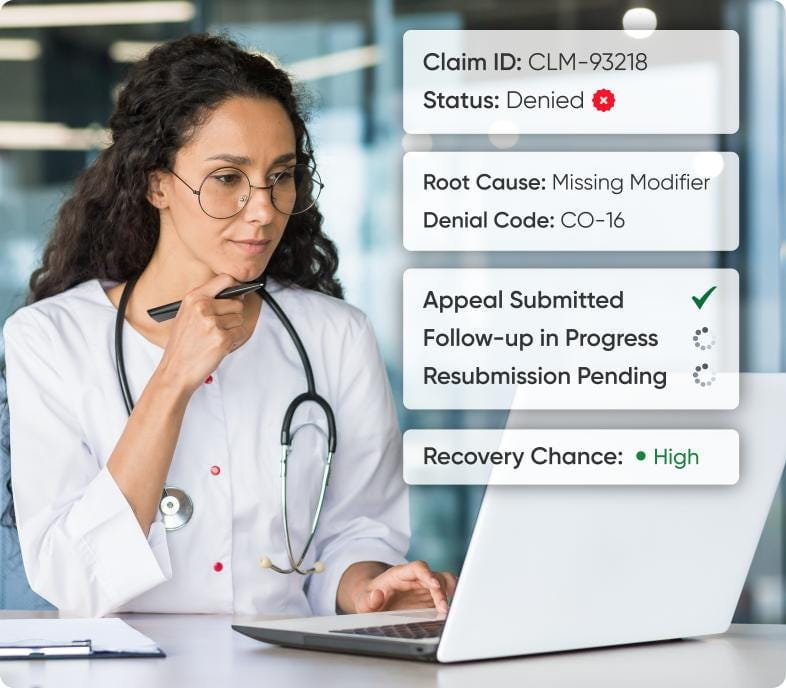
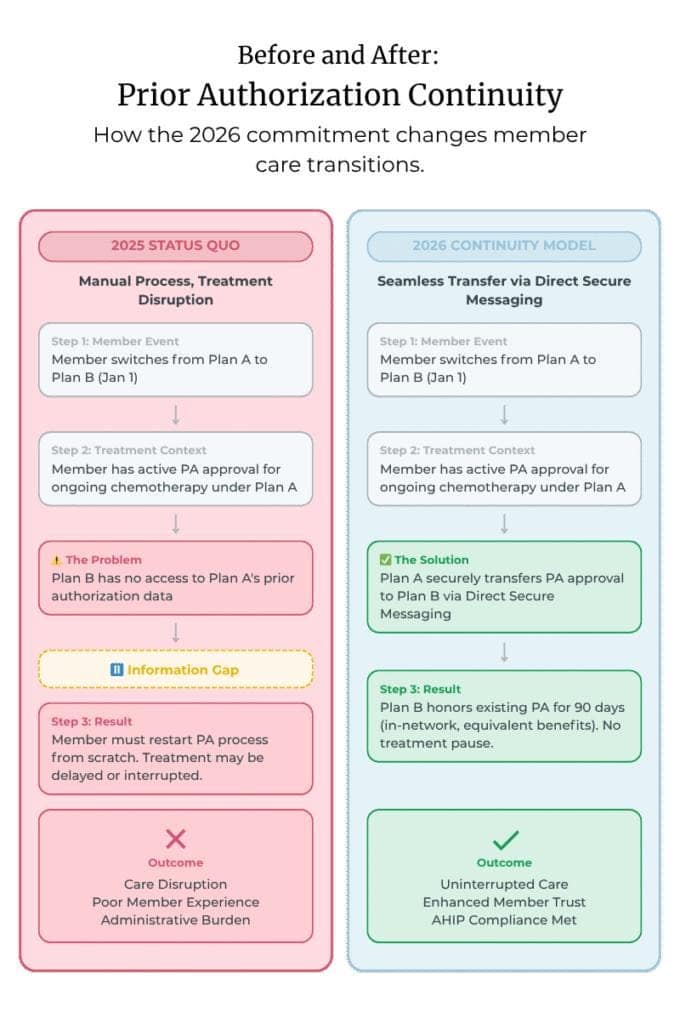
Healthcare leaders expected 2026 to be the year prior authorization finally became easier. Instead, denials increased by 31%. Administrative workloads grew, revenue cycle teams became overwhelmed, and practices found themselves spending even more time correcting coding errors, resubmitting requests, and appealing denials.
How did a regulation designed to simplify healthcare end up making operations harder? The answer isn't that CMS failed. It's that technology wasn't ready.
CMS introduced one of the largest healthcare interoperability reforms in years. The goal wasn't simply to speed approvals — it was to modernize the entire healthcare authorization ecosystem.
Urgent requests within 72 hours; standard requests within 7 days.
Payers must now provide detailed reasons for every rejection instead of vague denials.
Systems move from fax, phone calls, and manual portals to electronic, API-based authorization.
Payers must publicly report approval rates, denial rates, and processing times.
This surprised nearly everyone. But the increase wasn't caused by stricter CMS regulations. It resulted from three operational failures occurring simultaneously.
2026 introduced 288 new CPT codes and 614 ICD-10 updates. Many practices continued submitting outdated codes — the result was automatic denials.
Many organizations still rely on Excel, email, phone calls, and paper documentation. When complexity increased, human workflows couldn't keep up.
CMS shortened response times, but payer documentation requirements stayed equally complex. Rather than delay incomplete requests, many payers simply denied them faster.
| Metric | Value |
|---|---|
| Increase in Denials | 31% |
| Medicare Prior Auth Requests | 52.8 Million |
| Denial Rate | 7.7% |
| Appeals Overturned | 80.7% |
That means many denials were avoidable — but only if providers had the resources to appeal.
Most organizations focus on the 2026 rule. They're looking at the wrong milestone. The real transformation begins in 2027 — that's when electronic prior authorization APIs become mandatory, FHIR interoperability becomes operational, and vendor readiness becomes critical.
Organizations relying on manual workflows won't simply become inefficient — they risk non-compliance.
Before renewing your contract, ask:
If your vendor struggles to answer these questions, your organization may face avoidable disruption in 2027.
The recent spike in denials doesn't mean CMS reforms failed. It highlights a gap between policy and operational readiness. The next eighteen months represent a critical transition period.
The future of prior authorization isn't about working faster — it's about working smarter. Organizations that embrace FHIR interoperability, automation, and real-time payer connectivity will reduce administrative burden, improve patient access, and strengthen financial performance. The 2027 deadline is approaching quickly. The time to prepare is now.
Bytechnik builds FHIR-compliant, automation-first healthcare workflows and revenue cycle integrations. Let's pressure-test your readiness before the 2027 deadline.
Book a 30-min Strategy CallExplore Compliant Healthcare SoftwareContinue exploring this topic with more articles from the same series.
Congress advanced 15 bipartisan health bills and CMS launched retrospective GLP-1 authorization. Why prior authorization reform is really a technology challenge—and how to prepare.
Read articlePurpose-built EMR: clinical workflows, HIPAA-aware design, FHIR interoperability, and AI-ready architecture for modern care delivery.
Read articleArchitecture, secure video, remote monitoring, and EMR integration for seamless virtual care delivery.
Read articlePart of our Healthcare Technology series
EMR, EHR, telehealth, and HIPAA-aware healthcare software. Explore the full service and scope a first engagement with our team.
Continue exploring this topic with more articles from the same series.
Congress advanced 15 bipartisan health bills and CMS launched retrospective GLP-1 authorization. Why prior authorization reform is really a technology challenge—and how to prepare.
Read articlePurpose-built EMR: clinical workflows, HIPAA-aware design, FHIR interoperability, and AI-ready architecture for modern care delivery.
Read articleArchitecture, secure video, remote monitoring, and EMR integration for seamless virtual care delivery.
Read article