Telehealth & Virtual Care Platforms
Architecture, secure video, remote monitoring, and EMR integration for seamless virtual care delivery.
Read article— HEALTHCARE IT —
Most EMRs were built for the system. The best ones are built for the people inside it.
Healthcare is one of the most complex systems we have ever built — yet much of it still runs on software that was never designed for its reality. Here is how custom EMR development closes the gap between clinical workflows and the technology that powers them.
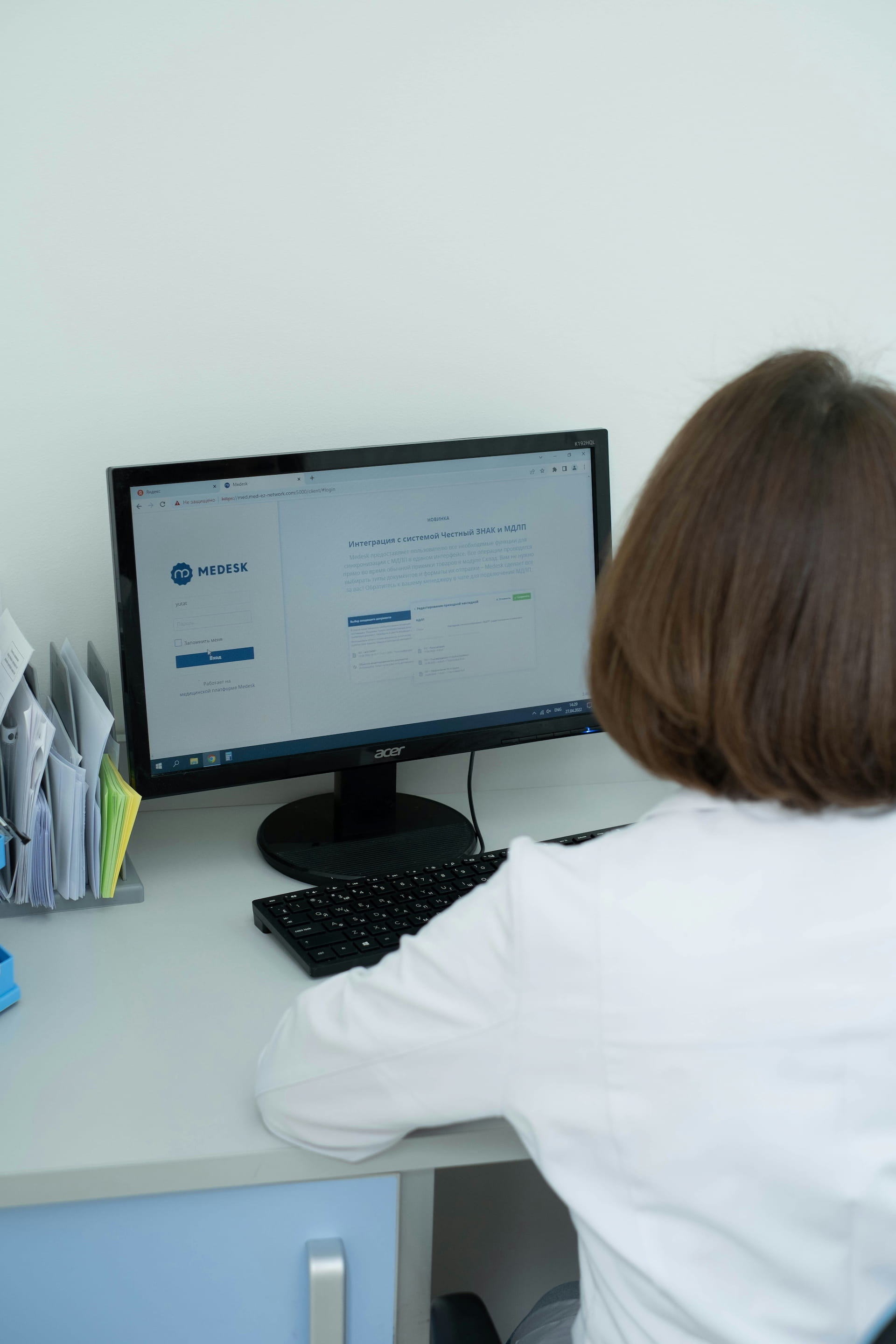

Electronic Medical Records (EMRs) were supposed to simplify care delivery. Instead, many clinicians today feel like they are working for the system, not the other way around. Doctors spend more time documenting than diagnosing. Nurses adapt to workflows that do not reflect real patient care. Administrators struggle to bridge gaps between clinical, billing, and compliance systems.
At Bytechnik LLC, we see the same pattern across organizations: the bottleneck is rarely “going digital” — it is whether the EMR reflects how care is actually delivered, audited, and reimbursed.
Most EMRs are built as generalized platforms. They aim to serve everyone — hospitals, clinics, specialties, regions — with a single architecture. But healthcare is not uniform. An ICU workflow is fundamentally different from an outpatient visit. A California-compliant hospital operates under different regulatory pressures than a small private clinic. Even within the same department, physicians develop their own patterns of care.
Yet traditional EMRs attempt to standardize all of this. Over time, the gap between real-world healthcare and software design becomes painfully visible — in clicks, workarounds, duplicate data entry, and burnout.
Custom EMR development starts with a different assumption: software should adapt to healthcare — not the other way around. Instead of forcing workflows into rigid templates, a custom system is shaped around how clinicians actually document and think, how departments interact in real time, how compliance is enforced day to day, and how data flows across labs, pharmacy, and billing.
When done right, the EMR becomes less of a tool — and more of an invisible layer supporting care.
Another shift is happening quietly: EMRs are evolving from storage systems into intelligent assistants. In the systems we build at Bytechnik, that evolution shows up as clinical conversations transformed into structured SOAP notes in real time; terminology systems (SNOMED, ICD-10, RxNorm) integrated at the core — not bolted on later; data that is interpreted, summarized, and actionable; and workflows that adapt across OPD, IPD, and critical care.
Custom architecture matters because intelligence cannot be layered effectively on top of rigid systems — it needs to be designed into the foundation.
Structured notes from natural clinical dialogue, aligned to how your teams already chart.
Coding and clinical vocabularies wired into data models from day one — fewer mapping layers, fewer surprises at billing and quality reporting.
A custom EMR only earns its keep if it can talk to the rest of the healthcare ecosystem — referral networks, health information exchanges, payers, and the patient's own apps. The practical way to get there is to build on established standards rather than one-off point-to-point connectors that break with every upgrade. The modern baseline is HL7 FHIR (Fast Healthcare Interoperability Resources), which the standards body HL7 describes as a standard for health care data exchange built on common web technologies such as REST, JSON, and OAuth 2.0. Designing data models around FHIR resources — Patient, Encounter, Observation, MedicationRequest — from the start means clinical data is portable by default, not trapped in proprietary tables.
Standards-based design is also increasingly a regulatory expectation. U.S. national coordination bodies have aligned certification and content requirements around FHIR-based APIs, so an EMR that speaks FHIR natively is far easier to certify, integrate, and keep compliant than one that bolts on an export layer at the end. We treat the United States Core Data for Interoperability (USCDI) data classes and FHIR US Core profiles as design inputs, not last-minute mapping exercises.
The fastest way to make an EMR fail is to ignore how care is actually delivered. A medication order placed during a rapid response looks nothing like a routine outpatient refill, and the interface should reflect that. Custom workflow design starts by mapping each clinical setting — emergency, inpatient, ambulatory, critical care — and the specific decision points, order sets, and handoffs inside it. The goal is to reduce clicks and cognitive load at the bedside, not to add documentation fields for their own sake.
This is also where clinician burnout is won or lost. When charting mirrors the way a team already reasons about a patient, documentation becomes a byproduct of care rather than a separate, competing task. Role-aware views, smart defaults, and context-sensitive order sets keep the screen relevant to the moment — a triage nurse, an attending physician, and a pharmacist each see what they need without wading through the rest.
Most clinical value lives at the seams between systems. An order placed in the EMR has to reach the laboratory, the pharmacy, and the imaging department — and the results have to flow back, in context, to the right chart. Established healthcare messaging standards make this dependable: HL7 v2 messaging still carries a large share of lab and ADT (admission, discharge, transfer) traffic, while FHIR and standardized terminologies handle the structured, queryable side. Wiring LOINC for lab observations, RxNorm for medications, and SNOMED CT and ICD-10 for clinical concepts into the data model means results arrive coded and comparable rather than as free text that someone has to re-interpret.
For pharmacy specifically, closed-loop medication management — order, verification, dispense, and administration all linked to the same record — depends on these integrations being designed in, not retrofitted. The same discipline that makes a system interoperable also makes it safer.
For organizations that need certified health IT — to participate in certain federal programs or to reassure partners — certification is far easier when the system was designed against the criteria from the start. Under the ONC Health IT Certification Program, certified products must meet capability, functionality, and security requirements adopted by the U.S. Department of Health and Human Services, including standardized API and data-export capabilities. Designing for those criteria up front — predictable audit logging, standardized data access, secure authentication — turns certification from a scramble into a checkpoint.
In healthcare, trust is everything. Regulations like HIPAA, HITECH, CMS, and state-level frameworks do not just define rules — they define responsibility. What we have learned building compliance-aligned systems is this: compliance fails when it is treated as a checklist. It works when it is treated as system design.
When compliance is embedded this way, it stops being a burden — and becomes part of how the system naturally operates.
Healthcare is entering a new phase. AI is becoming practical. Interoperability is no longer optional. Patients expect digital experiences that match other industries. Legacy EMRs were not built for this world — custom systems, by contrast, can be modular, interoperable (FHIR and modern APIs from day one), AI-ready for real-time processing and insights, and scalable across departments and facilities.
This is not just a technical upgrade. It is a structural one.
While working on full-scale, compliance-aligned EMR platforms, one idea keeps surfacing: the best EMR is the one clinicians do not have to think about — not because it is simplistic, but because it is aligned with workflows, regulations, and how healthcare actually functions.
Bytechnik LLC delivers compliance-aligned, AI-ready EMR platforms for healthcare providers who need software aligned with clinical and operational reality — not the other way around.
December 23, 2024
Continue exploring this topic with more articles from the same series.
Architecture, secure video, remote monitoring, and EMR integration for seamless virtual care delivery.
Read articleEncryption, access controls, and incident response that protect PHI for USA health systems and California healthcare providers.
Read articleAI-enabled EMR for clinical workflows, predictive insights, and better patient experiences for modern healthcare providers.
Read articlePart of our Healthcare Technology series
EMR, EHR, telehealth, and HIPAA-aware healthcare software. Explore the full service and scope a first engagement with our team.
Continue exploring this topic with more articles from the same series.
Architecture, secure video, remote monitoring, and EMR integration for seamless virtual care delivery.
Read articleEncryption, access controls, and incident response that protect PHI for USA health systems and California healthcare providers.
Read articleAI-enabled EMR for clinical workflows, predictive insights, and better patient experiences for modern healthcare providers.
Read article