Kubernetes & Cloud Orchestration
Deploy, scale, and manage containerized apps across cloud environments with Kubernetes—Bytechnik LLC overview.
Read articleThe companies winning in the cloud don't simply optimize infrastructure — they build products that naturally cost less to operate.
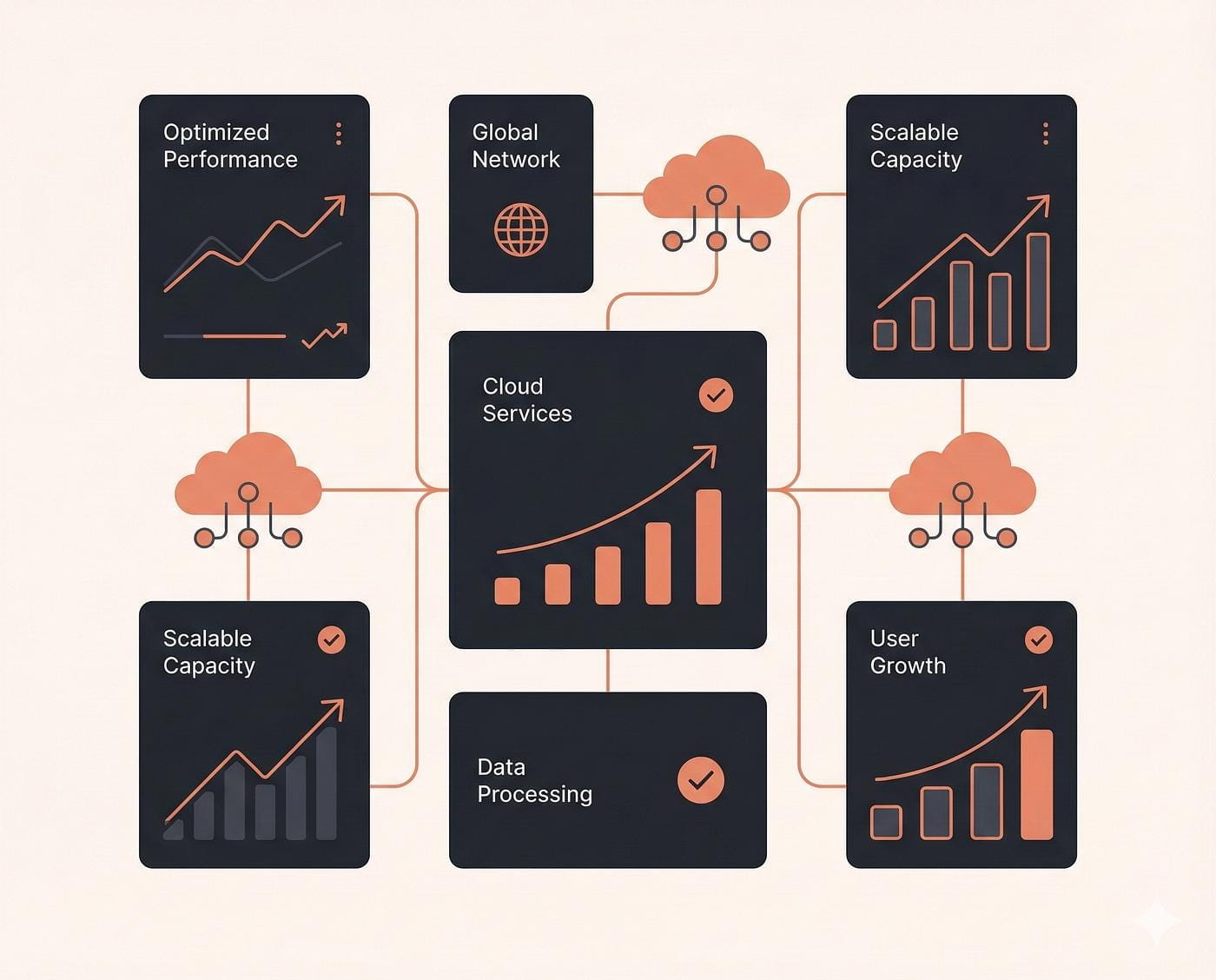
Every month, the same meeting happens inside thousands of companies. The finance team opens the latest cloud invoice. The CTO raises an eyebrow. Engineering starts looking for idle servers. DevOps begins deleting unused storage. Someone asks if Reserved Instances should be purchased. Someone else recommends Kubernetes optimization. Another engineer starts checking auto-scaling configurations.
The discussion continues for hours. At the end, maybe the company saves 8%. Perhaps 12%. If they're lucky, 20%.
Then next month… the bill grows again.
“Because the real problem was never infrastructure. It was the product itself.”
Most organizations assume cloud costs are controlled by infrastructure engineers. That's only partially true. Infrastructure teams can optimize CPU utilization, memory allocation, storage tiers, Reserved Instances, Spot Instances, autoscaling, load balancing, and networking.
These optimizations absolutely matter. But they only improve how efficiently your infrastructure runs. They don't change how much infrastructure your product requires.
That's an entirely different problem — and it's solved much earlier, during product design.
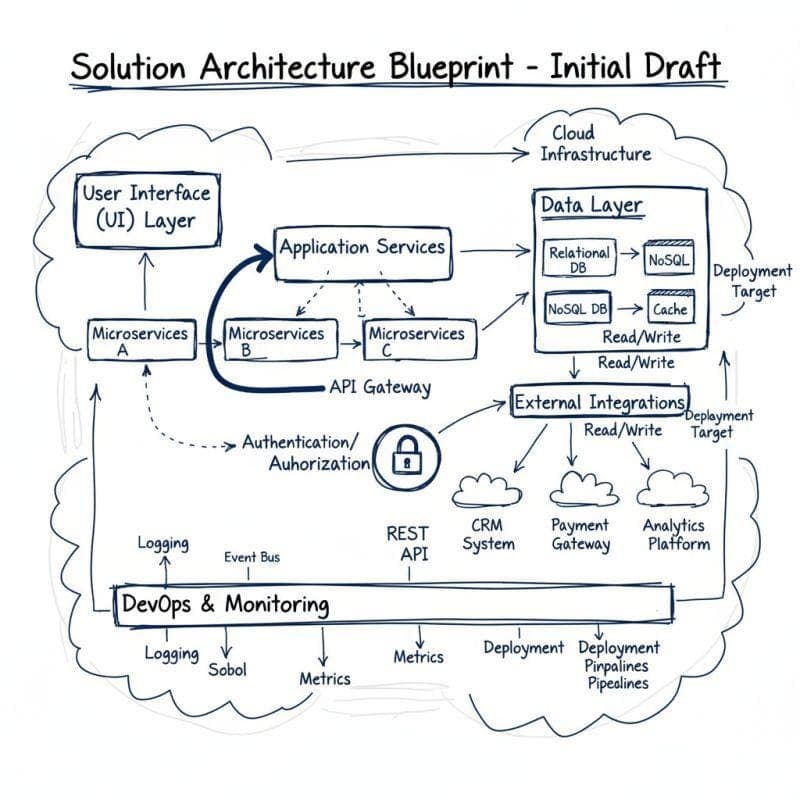
Imagine two companies launching nearly identical SaaS products. Both attract 100,000 users. Both generate $2 million annually. Both use AWS. Both use Kubernetes. Both hire talented engineers. After one year:
$40,000/month
$180,000/month
Why? Because Company B built expensive software — not expensive infrastructure.
Every feature has a hidden infrastructure price. For example, a product manager requests: “Let's refresh dashboards every 10 seconds.” Looks harmless. Engineering implements it. But now:
100,000 users × 6 refreshes per minute × 24 hours
= 864 million dashboard requests every day
That single product decision now requires more CPUs, more Redis memory, larger databases, bigger Kubernetes clusters, more cache invalidation, more API gateways, and more bandwidth.
Infrastructure didn't create the bill. The product requirement did.
Think about the features users ask for every day. Each one sounds exciting. Each one also creates infrastructure demand.
Companies often celebrate feature releases. Very few celebrate infrastructure efficiency. Yet both directly affect profitability.
Cloud costs rarely grow linearly. They multiply. A startup launches with 1 API, 1 database, and 2 servers — a $800 monthly bill. Six months later they add notifications, search, AI, image processing, reports, mobile APIs, audit logs, and integrations.
$800 → $18,000/month
Revenue doubled. Infrastructure cost increased 22×.
The engineering team blames AWS. AWS isn't the problem. Architecture is.
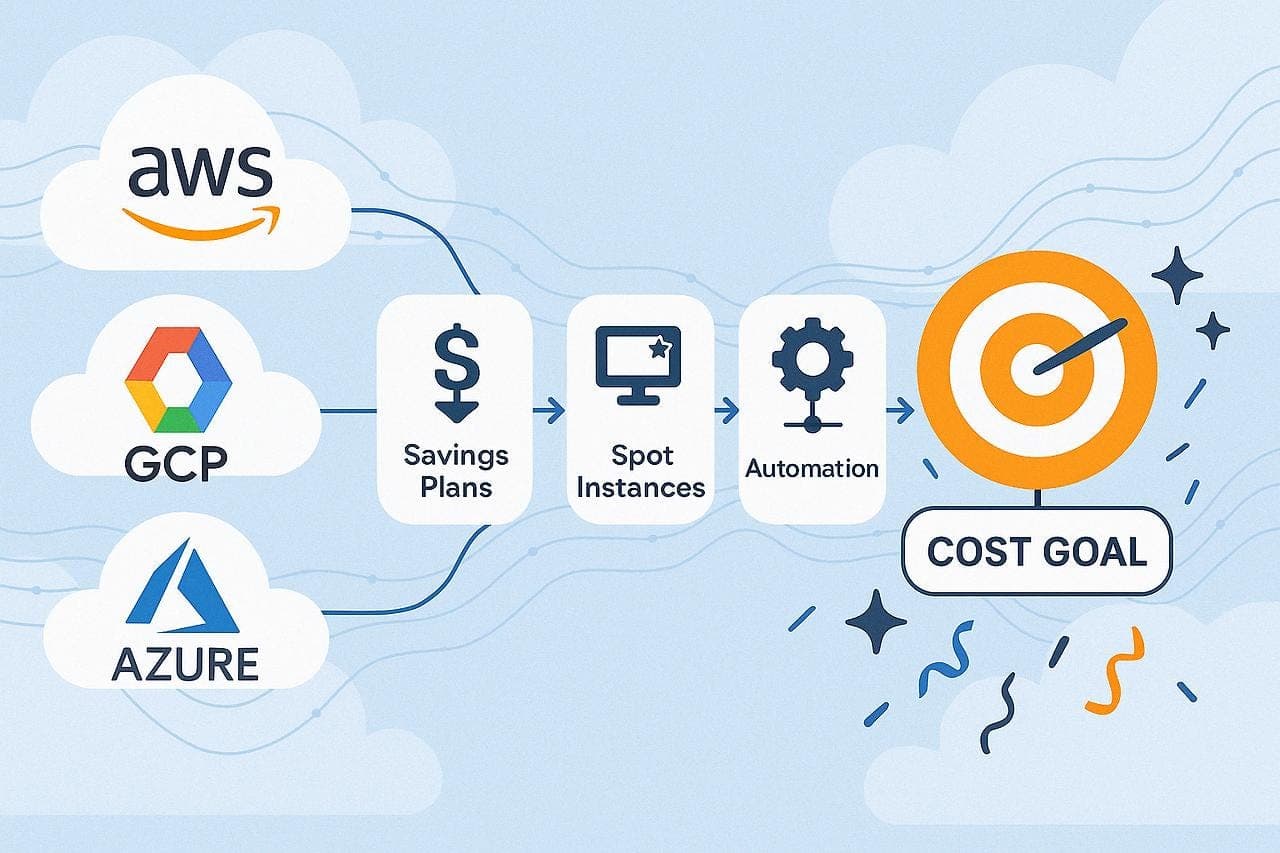
Many organizations only optimize after cloud spending becomes painful. Typical reactions include: “We need Reserved Instances.” “We should compress logs.” “Move cold storage to Glacier.” “Delete old snapshots.” “Reduce instance sizes.”
These help. But they don't eliminate the root cause. It's like improving fuel efficiency after buying a truck that was too large in the first place.
One interesting organizational problem exists. Product Managers decide features. Designers decide user experience. Engineers build functionality. Finance pays invoices. DevOps gets blamed. The people making expensive product decisions often never see the monthly infrastructure bill.
Imagine if every feature request included:
Estimated Engineering Time
Estimated Revenue
Estimated Cloud Cost
Estimated Long-Term Maintenance
Many roadmaps would immediately change.
Before writing code, ask:
These questions save far more money than infrastructure tuning later.
Monthly bill: High.
Monthly bill: Significantly smaller.
Same user experience. Users notice almost no difference. Finance notices everything.
AI applications consume significantly more infrastructure than traditional software. Every AI request may involve GPU compute, vector databases, embedding generation, token processing, external APIs, prompt storage, response caching, and security scanning.
One unnecessary AI feature can multiply cloud spending overnight. Before adding AI, ask: does this feature create measurable customer value — or is it simply fashionable?
For years, FinOps focused on infrastructure optimization. Today, mature organizations understand something much bigger: cost optimization starts inside product strategy. The best FinOps teams now work alongside Product Managers, Engineering Leaders, Architects, Finance Teams, and Platform Engineers.
Cloud cost becomes another product metric — just like customer satisfaction, retention, revenue, conversion, and performance.
| Instead of only tracking… | Track… |
|---|---|
| CPU Usage | Cloud Cost per Customer |
| Memory | Cloud Cost per Transaction |
| Storage | Cloud Cost per Feature |
| Network | Cloud Cost per API Request / AI Query / Active User |
These metrics reveal where profitability disappears.
Architecture isn't merely a technical blueprint. It directly affects gross margin, EBITDA, customer pricing, enterprise valuation, investor confidence, scalability, and long-term profitability.
A system that's twice as efficient can become a significant competitive advantage.
Leading technology companies don't treat cloud optimization as a quarterly cleanup activity. They make it part of product development. Every new feature is evaluated for customer impact, business value, engineering effort, security implications, operational complexity, and long-term infrastructure cost.
As a result, they don't just build products that customers love. They build products that remain profitable as they scale.
Instead of asking:
“How can we reduce our AWS bill?”
Ask:
“Why does our product require this much infrastructure in the first place?”
That single question shifts the conversation from reactive cost-cutting to proactive product design. It encourages teams to build leaner architectures, make smarter feature decisions, and focus on sustainable growth rather than endless optimization.
Cloud bills are often treated as an operations issue. But the biggest savings rarely come from deleting unused resources or negotiating better pricing. They come from making better product decisions before the first line of code is written.
Infrastructure optimization is important — but it has limits. Thoughtful product design, efficient architecture, and disciplined feature planning create software that scales gracefully without runaway costs. The organizations that understand this won't just spend less on cloud infrastructure. They'll build more profitable products, move faster, and gain a lasting competitive advantage.
If your cloud bill keeps increasing every quarter, don't start by asking your DevOps team to optimize servers. Start by asking your product team why the software needs those servers in the first place.
Bytechnik helps teams design efficient architectures and bring cloud cost into product decisions — before the bill becomes the problem. Let's look at where your spend actually comes from.
Book a 30-min Strategy CallExplore Our ServicesContinue exploring this topic with more articles from the same series.
Deploy, scale, and manage containerized apps across cloud environments with Kubernetes—Bytechnik LLC overview.
Read articleCI/CD, infrastructure as code, and observability so USA and California teams ship software safely and reliably at scale.
Read articlePlan, secure, and optimize cloud migrations: architecture, compliance, and cost controls for enterprise teams—Bytechnik LLC.
Read articlePart of our Cloud & DevOps series
AWS, Azure, and GCP infrastructure with DevOps automation. Explore the full service and scope a first engagement with our team.
Continue exploring this topic with more articles from the same series.
Deploy, scale, and manage containerized apps across cloud environments with Kubernetes—Bytechnik LLC overview.
Read articleCI/CD, infrastructure as code, and observability so USA and California teams ship software safely and reliably at scale.
Read articlePlan, secure, and optimize cloud migrations: architecture, compliance, and cost controls for enterprise teams—Bytechnik LLC.
Read article